Your symptoms
Describe the pain, swelling, or changes in knee movement.

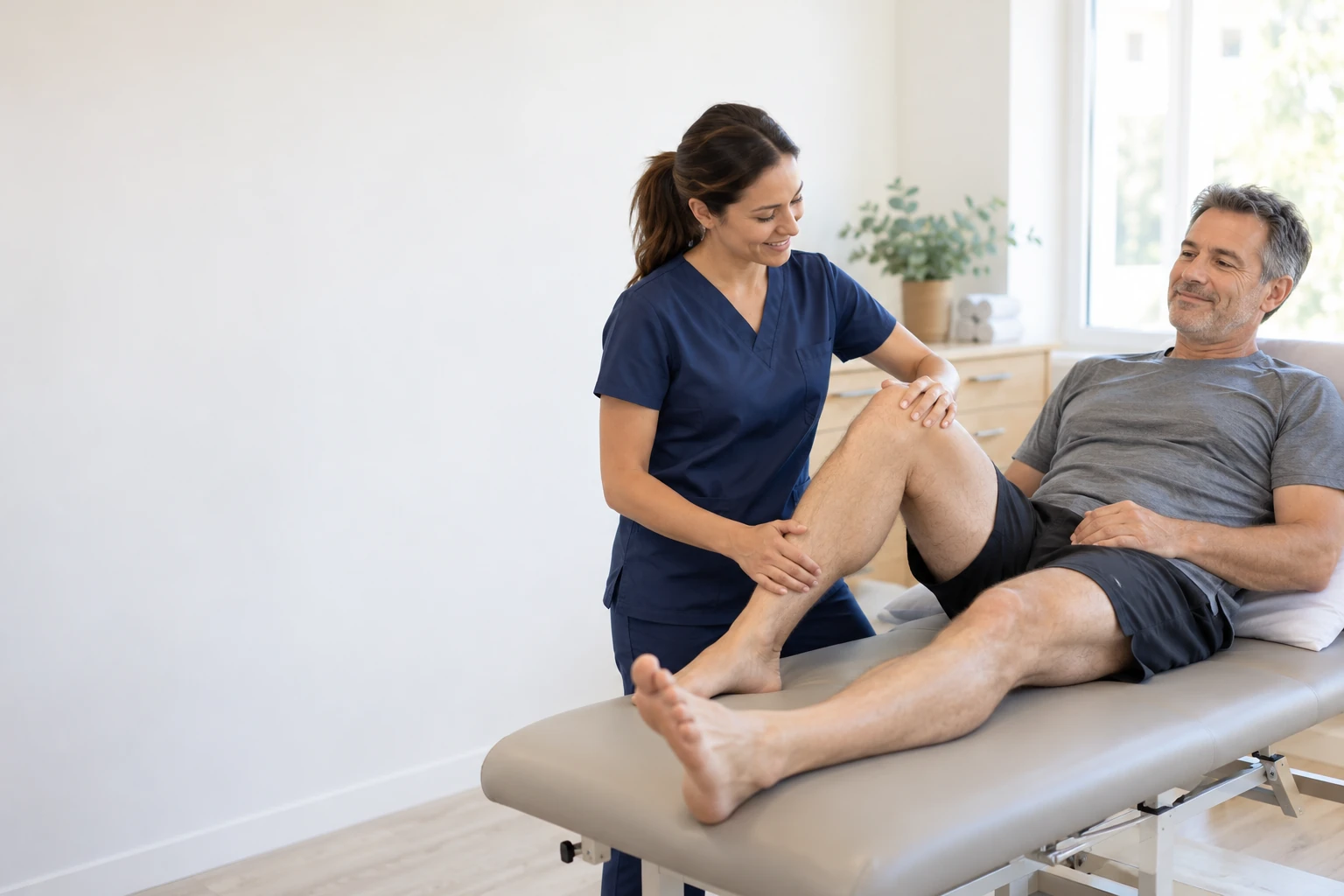
Knee care in Freeport
Knee pain can make stairs, walking, and getting up from a chair uncomfortable. Talk with our team about your symptoms and the activities you want to return to.
Understanding knee pain
Your knee brings together bones, cartilage, ligaments, and tendons to bend and support your leg. An injury or irritation in these structures can change how it feels and moves.
Tell us where it hurts, when symptoms started, and whether you noticed swelling or instability. Your history and examination help guide care or further assessment.
Describe the pain, swelling, or changes in knee movement.
Share how walking, stairs, work, or sport feel.
Ask about suitable treatment and any further assessment needed.
Common causes
Knee pain can follow a sudden injury or develop with repeated activity. Similar symptoms can have different causes.
Repeated running or jumping can irritate tissues around the knee. Patellar tendinitis and iliotibial band concerns are examples to discuss with your clinician.
Twisting, a direct blow, or an awkward landing can injure the ligaments or meniscus. Swelling, locking, or a knee that gives way needs assessment.
Arthritis can affect the knee joint, while bursitis involves irritation of a fluid-filled sac near it. Both can involve soreness, stiffness, or swelling.
Your hips, ankles, and surrounding muscles influence how you move. An assessment may include these areas alongside the knee and the activities that bring on pain.
What you may notice
Tell your clinician where you feel discomfort and how it changes with movement. Describe any swelling or trouble putting weight on the leg.
Care at our clinic
Our team will discuss whether care at the clinic fits your needs or whether further medical assessment is appropriate.
Talk about how the problem started, previous injuries, current care, and the activities affected.
Ask about the assessment findings, proposed treatment, alternatives, costs, and what to expect.
Follow the guidance agreed with your clinician. Your response helps guide changes to the plan or referral when needed.
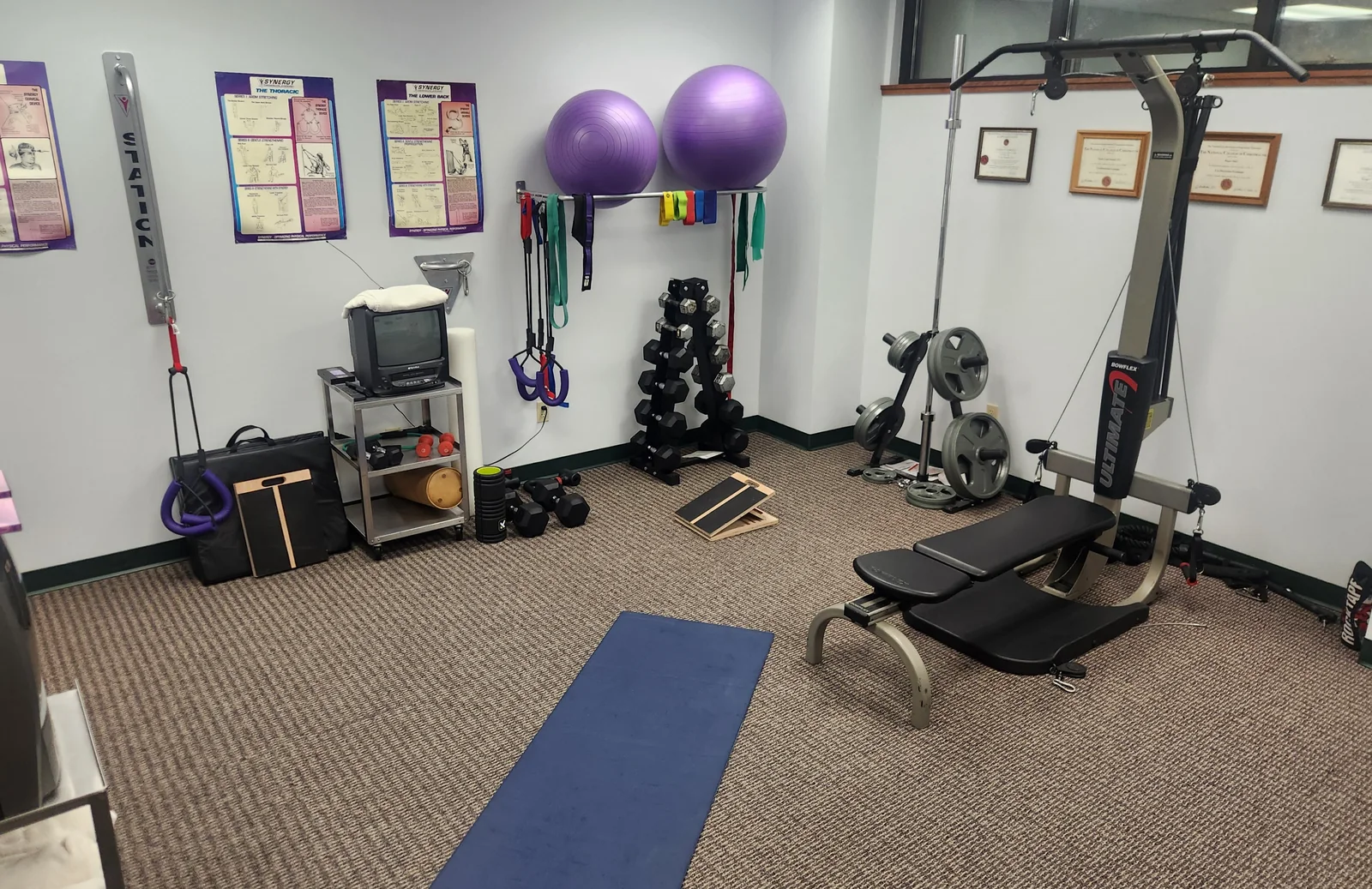
Your Freeport care team
Depending on your assessment, care may include soft tissue work and rehab exercises. Ask how each recommendation fits your knee symptoms and when your progress will be reviewed.
Bring questions about stairs, exercise, and returning to your usual routines. We can talk through activity changes and how to practice any exercises agreed at your visit.
Common questions
Ask about daily activity, care options, and when to seek further assessment.
Many knee problems can be managed without surgery. The cause, injury severity, and your response to care guide the options. Some ligament tears, fractures, or advanced joint problems need specialist assessment and may require surgery.
Reduce activities that make the knee hurt. With a recent painful or swollen knee, limit weight on it and avoid long periods of standing. Ask your clinician when to resume walking, exercise, or sport.
Suitable exercises can work on movement and the muscles that support your knee. Your clinician can help choose a starting point and adjust the load. A new injury or a locked or unstable knee needs assessment before exercise.
Ask a pharmacist or prescribing clinician which medicines are suitable for your health history. For pain and swelling, an ice pack wrapped in a towel can be used for up to 20 minutes every 2 to 3 hours. Keep ice off bare skin.
Get urgent medical assessment if you cannot move the knee or bear weight, have severe pain, marked swelling, a changed knee shape, locking, or giving way. A hot or red knee with fever or feeling unwell also needs urgent attention.
Recovery depends on the problem, its severity, and your response to care. Ask when to review progress and what to expect when returning to activity. Persistent or worsening symptoms need reassessment.
Patient information: NHS knee pain guidance · AAOS knee injury guidance
Talk with our team
Call with questions or to arrange a visit at our Freeport clinic.