Your symptoms
Describe the location, timing, and severity of your headaches.


Headaches in Freeport
Recurring headaches can interrupt work, sleep, and daily plans. Talk with our team about your headache pattern and any neck or shoulder tension.
Understanding headaches
Headaches have several possible causes and need different approaches to care. This page focuses on tension-type headaches, which can involve pressure or tightness around the head.
Tell us when they started, how often they happen, and what else you notice. Our team can discuss whether clinic care fits your needs or a medical review is needed.
Describe the location, timing, and severity of your headaches.
Share sleep patterns, work habits, and any possible triggers.
Ask which treatments or further assessments fit your needs.
Patterns & possible triggers
A headache diary can help you and your clinician discuss recurring patterns. Triggers vary, and a pattern alone does not establish a diagnosis.
Stress can be associated with tension-type headaches. Tell us about demanding days, relaxation habits, and whether symptoms occur alongside neck or shoulder tightness.
Sleep problems can contribute to tension headaches. Discuss your usual routine, changes in sleep, and whether headaches affect your ability to rest.
Caffeine and frequent painkiller use can be part of the pattern. Tell your clinician what you take and how often, including nonprescription medicines.
Tell us if symptoms occur with prolonged screen use, neck discomfort, or particular work positions. These details help guide your assessment without assuming the headache has one cause.
What you may notice
These are features to discuss during an assessment. Frequent, severe, or changing headaches deserve medical review, especially when other symptoms appear.
Our team will discuss whether care at the clinic fits your needs or whether further medical assessment is appropriate.
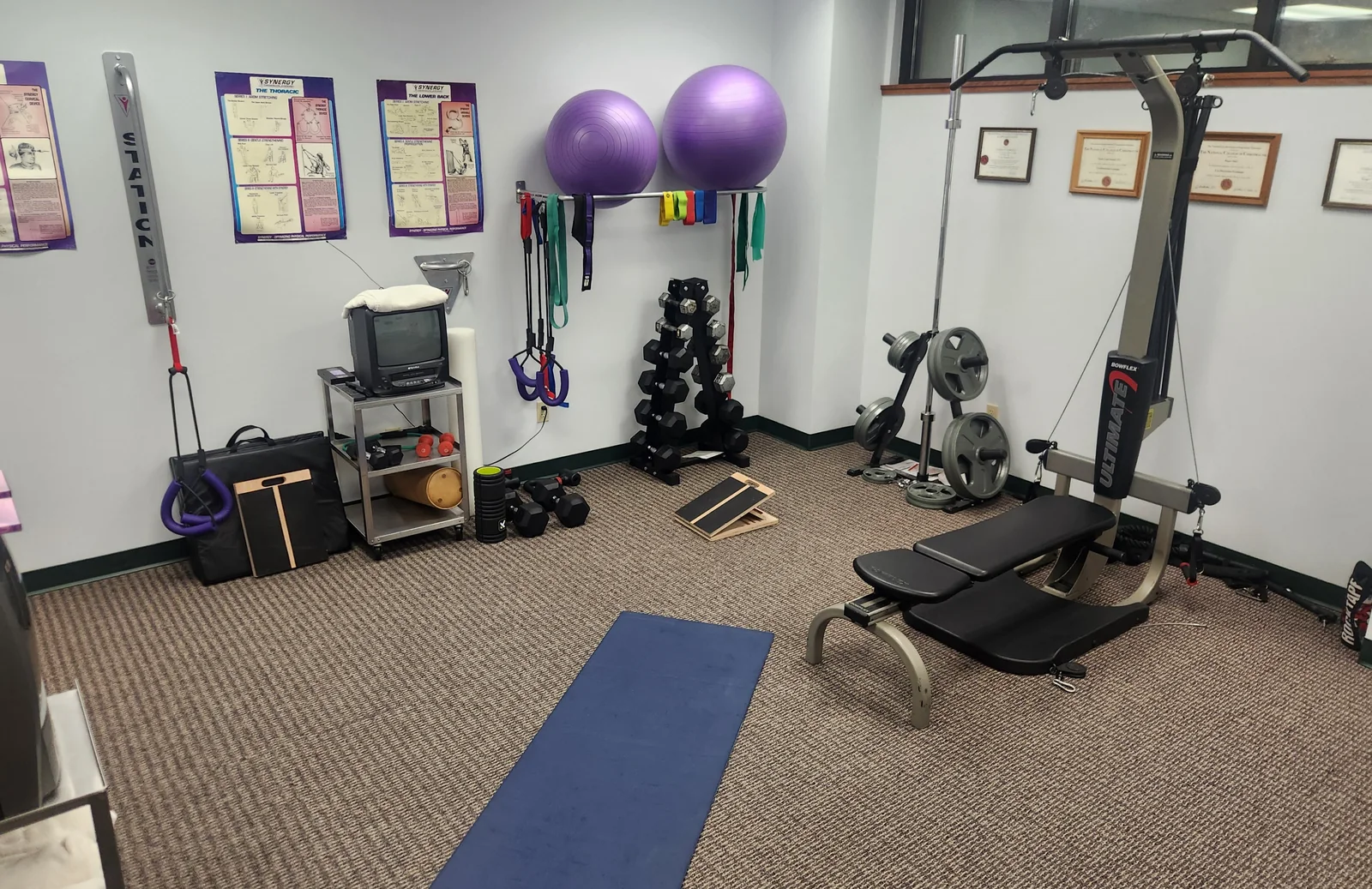
Your Freeport care team
If an assessment identifies related neck or muscle concerns, ask whether soft tissue care or movement guidance is appropriate. Recommendations depend on the headache pattern and your health history.
Bring your headache diary and questions about work, rest, and daily routines. Our team will explain the proposed care and when further medical assessment is appropriate.
Common questions
Ask about daily activity, care options, and when to seek further assessment.
It often feels like pressure or tightness on both sides of the head, sometimes with tenderness in the head or neck. It may last from 30 minutes to several days. A clinician can help distinguish it from other headache types.
Migraine can involve throbbing pain, often on one side, with nausea or sensitivity to light and sound. Movement may make it worse. Some people have visual or other warning symptoms. New or changing symptoms need medical assessment.
Gentle activity and relaxation may suit tension-type headaches. Ask which movements are appropriate if neck discomfort is also present. A headache triggered or worsened by exercise, coughing, or bending needs prompt medical review.
Ask a pharmacist or prescribing clinician which medicines fit your health history and how often to use them. Frequent painkiller use can itself lead to headaches. Tell your clinician about all medicines you take.
Record when headaches happen, their duration and severity, other symptoms, possible triggers, and any medicines used. Bring the diary to your appointment to help discuss patterns and treatment options.
Seek emergency care for a sudden, extremely painful headache, weakness, numbness, vision loss, confusion, difficulty speaking, a seizure, or a headache after a head injury. A severe headache with fever and a stiff neck also needs emergency assessment.
Patient information: NHS headache guidance · NHS tension headache guidance
Talk with our team
Call with questions or to arrange a visit at our Freeport clinic.